Negative Sampling in Knowledge Graph Representation Learning: A Review
作者: Tiroshan Madushanka, Ryutaro Ichise
分类: cs.AI
发布日期: 2024-02-29 (更新: 2024-10-21)
💡 一句话要点
综述负采样方法以提升知识图谱表示学习的效果
🎯 匹配领域: 支柱二:RL算法与架构 (RL & Architecture)
关键词: 知识图谱 表示学习 负采样 机器学习 信息检索 推荐系统 模型评估
📋 核心要点
- 现有的负采样方法在生成高质量负样本方面存在困难,影响了知识图谱表示学习的准确性。
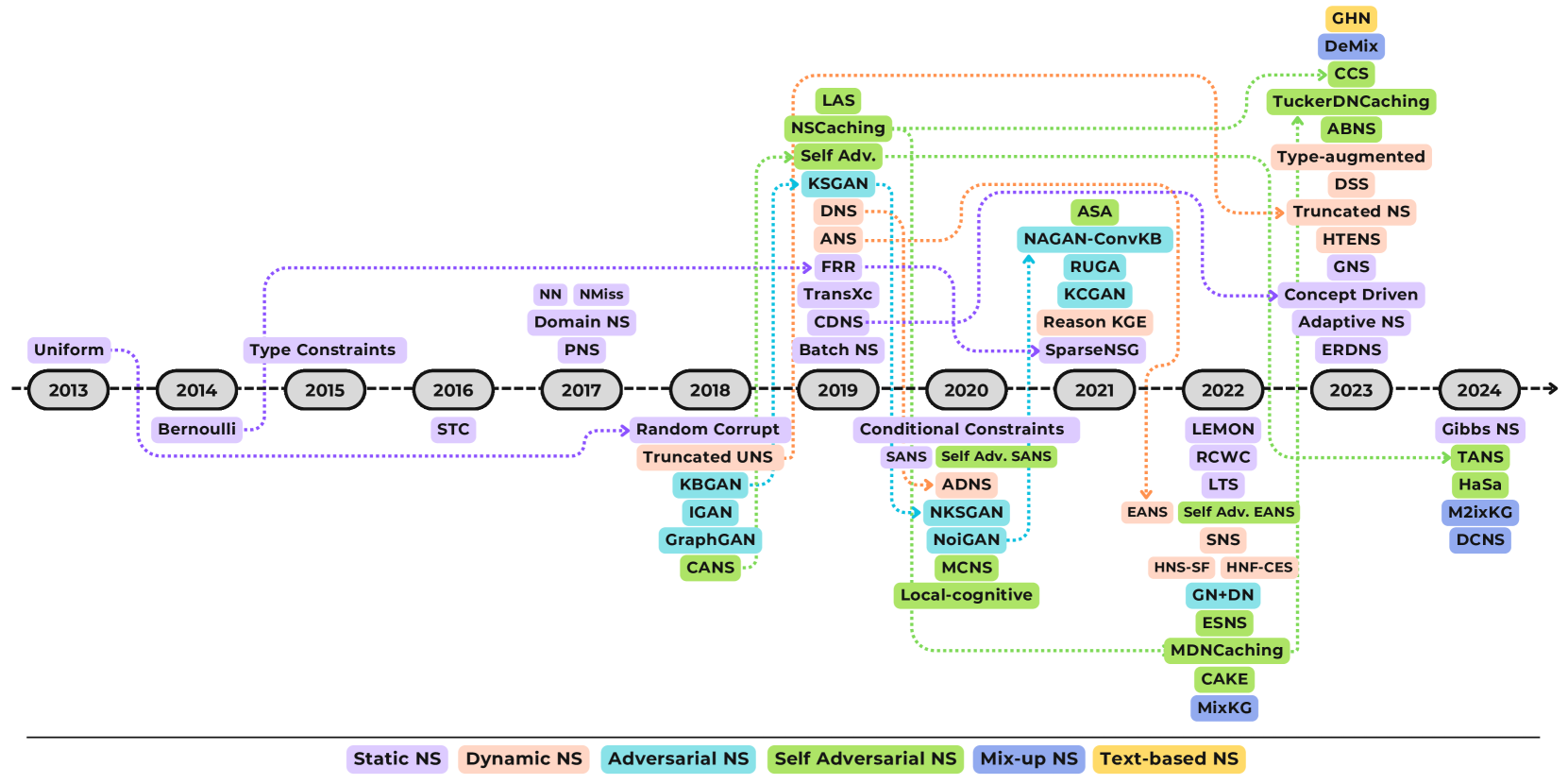
- 本文系统性回顾了负采样方法,分类总结了六种不同的负采样策略及其优缺点。
- 通过识别未来研究的开放问题,本文为KGRL领域的进一步发展提供了方向和启示。
📝 摘要(中文)
知识图谱表示学习(KGRL)或知识图谱嵌入(KGE)在知识构建和信息检索等人工智能应用中至关重要。这些模型将实体和关系编码为低维向量,支持链接预测和推荐系统等任务。训练KGE模型依赖于正负样本的有效学习,但从现有知识图谱生成高质量的负样本具有挑战性。负样本的质量显著影响模型的准确性。本文系统性地回顾了各种负采样方法及其对KGRL成功的贡献,分类总结了六种不同的负采样方法的优缺点,并识别了未来研究的开放问题,为设计有效的负采样方法提供了宝贵的见解。
🔬 方法详解
问题定义:本文旨在解决从知识图谱中生成高质量负样本的挑战,现有方法在样本质量上存在不足,影响了模型的学习效果。
核心思路:通过系统性回顾和分类现有的负采样方法,本文提出了一种全面的框架,以帮助研究者理解不同方法的优缺点,从而设计更有效的负采样策略。
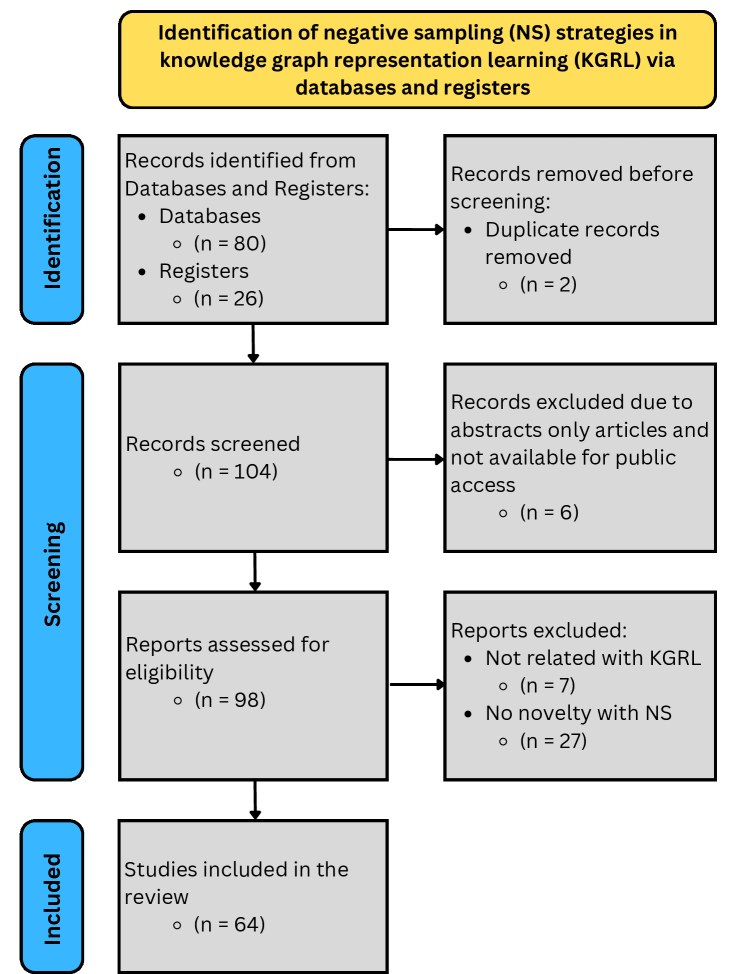
技术框架:整体架构包括对现有负采样方法的分类、优缺点分析以及未来研究方向的识别,主要模块包括文献回顾、方法分类和开放问题讨论。
关键创新:本文的创新在于系统性地将负采样方法进行分类,并提供了对各类方法的深入分析,填补了现有文献中的空白。
关键设计:在方法分类中,本文考虑了不同的负采样策略,包括随机采样、基于模型的采样等,并探讨了各自的参数设置和适用场景。通过这种方式,研究者可以更好地选择适合其应用的负采样方法。
🖼️ 关键图片
📊 实验亮点
本文通过系统性回顾和分类,揭示了不同负采样方法的优缺点,为未来研究提供了明确的方向。通过对比分析,发现某些新方法在特定任务上能够显著提升模型的性能,具体提升幅度未知。
🎯 应用场景
该研究的潜在应用领域包括知识图谱构建、信息检索、推荐系统等。通过提升负采样的质量,能够显著提高模型的学习效果和准确性,推动相关领域的技术进步和应用落地。
📄 摘要(原文)
Knowledge Graph Representation Learning (KGRL), or Knowledge Graph Embedding (KGE), is essential for AI applications such as knowledge construction and information retrieval. These models encode entities and relations into lower-dimensional vectors, supporting tasks like link prediction and recommendation systems. Training KGE models relies on both positive and negative samples for effective learning, but generating high-quality negative samples from existing knowledge graphs is challenging. The quality of these samples significantly impacts the model's accuracy. This comprehensive survey paper systematically reviews various negative sampling (NS) methods and their contributions to the success of KGRL. Their respective advantages and disadvantages are outlined by categorizing existing NS methods into six distinct categories. Moreover, this survey identifies open research questions that serve as potential directions for future investigations. By offering a generalization and alignment of fundamental NS concepts, this survey provides valuable insights for designing effective NS methods in the context of KGRL and serves as a motivating force for further advancements in the field.