Utilizing BERT for Information Retrieval: Survey, Applications, Resources, and Challenges
作者: Jiajia Wang, Jimmy X. Huang, Xinhui Tu, Junmei Wang, Angela J. Huang, Md Tahmid Rahman Laskar, Amran Bhuiyan
分类: cs.IR, cs.AI, cs.CL
发布日期: 2024-02-18
💡 一句话要点
利用BERT提升信息检索效果的综述与挑战
🎯 匹配领域: 支柱九:具身大模型 (Embodied Foundation Models)
关键词: 信息检索 BERT 自然语言处理 深度学习 语义信息 长文档处理 生成式模型
📋 核心要点
- 现有的信息检索方法在处理长文档和语义信息整合方面存在不足,难以平衡效果与效率。
- 本文提出了一种基于BERT的多种信息检索方法,涵盖长文档处理、语义信息整合等六大类技术。
- 研究表明,经过精细调优的BERT编码器在特定任务中表现优于最新的生成式大语言模型,且成本更低。
📝 摘要(中文)
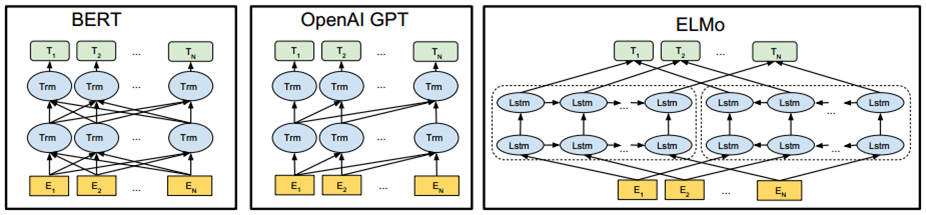
近年来,深度学习在自然语言处理(NLP)领域的应用显著增加。早期的深度学习模型因其顺序或单向特性,难以捕捉文本输入之间的上下文关系。BERT的引入为变换器模型提供了强大的编码器,能够理解更广泛的上下文,并在多种NLP任务中表现出色。本文综述了将预训练变换器编码器(如BERT)应用于信息检索(IR)的多种方法,分析了六大类技术,包括处理长文档、整合语义信息、平衡效果与效率等。我们还提供了相关资源的链接,并比较了BERT编码器与最新生成式大语言模型(如ChatGPT)的性能,发现经过精细调优的BERT编码器在特定任务中仍具优势,且部署成本更低。最后,本文总结了研究成果并提出未来研究方向。
🔬 方法详解
问题定义:本文旨在解决现有信息检索方法在处理长文档和语义信息整合方面的不足,尤其是在效果与效率之间的平衡问题。
核心思路:通过综述基于BERT的多种信息检索方法,探讨如何利用BERT的双向编码特性来提升信息检索的效果,并提出六大类技术来应对不同的挑战。
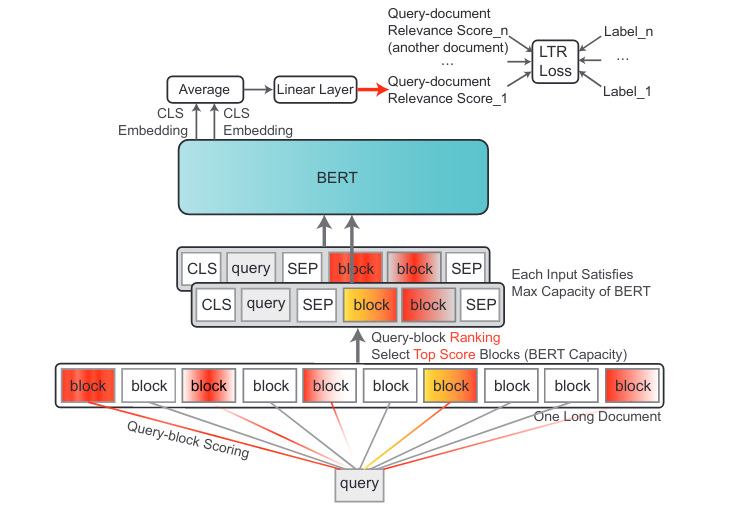
技术框架:整体架构包括数据预处理、BERT编码器的应用、信息检索模型的构建与评估。主要模块包括长文档处理、语义信息整合、效果与效率平衡等。
关键创新:本文的创新在于系统性地将BERT应用于信息检索领域,并与最新的生成式大语言模型进行比较,揭示了BERT在特定任务中的优势。
关键设计:在参数设置上,采用了适合信息检索的损失函数,并对BERT网络结构进行了调优,以适应不同的检索任务需求。
🖼️ 关键图片
📊 实验亮点
实验结果表明,经过精细调优的BERT编码器在特定信息检索任务中表现优于最新的生成式大语言模型,且在部署成本上具有明显优势。具体性能数据未提供,但研究强调了BERT在特定应用场景下的有效性。
🎯 应用场景
该研究的潜在应用领域包括搜索引擎、问答系统和推荐系统等,能够显著提升信息检索的准确性和效率。随着信息量的不断增加,基于BERT的检索方法将为用户提供更为精准的搜索体验,具有重要的实际价值和未来影响。
📄 摘要(原文)
Recent years have witnessed a substantial increase in the use of deep learning to solve various natural language processing (NLP) problems. Early deep learning models were constrained by their sequential or unidirectional nature, such that they struggled to capture the contextual relationships across text inputs. The introduction of bidirectional encoder representations from transformers (BERT) leads to a robust encoder for the transformer model that can understand the broader context and deliver state-of-the-art performance across various NLP tasks. This has inspired researchers and practitioners to apply BERT to practical problems, such as information retrieval (IR). A survey that focuses on a comprehensive analysis of prevalent approaches that apply pretrained transformer encoders like BERT to IR can thus be useful for academia and the industry. In light of this, we revisit a variety of BERT-based methods in this survey, cover a wide range of techniques of IR, and group them into six high-level categories: (i) handling long documents, (ii) integrating semantic information, (iii) balancing effectiveness and efficiency, (iv) predicting the weights of terms, (v) query expansion, and (vi) document expansion. We also provide links to resources, including datasets and toolkits, for BERT-based IR systems. A key highlight of our survey is the comparison between BERT's encoder-based models and the latest generative Large Language Models (LLMs), such as ChatGPT, which rely on decoders. Despite the popularity of LLMs, we find that for specific tasks, finely tuned BERT encoders still outperform, and at a lower deployment cost. Finally, we summarize the comprehensive outcomes of the survey and suggest directions for future research in the area.