LL-GABR: Energy Efficient Live Video Streaming Using Reinforcement Learning
作者: Adithya Raman, Bekir Turkkan, Tevfik Kosar
分类: cs.MM, cs.AI
发布日期: 2024-02-14
备注: 10 pages, 3 figures, 3 Tables
💡 一句话要点
提出LL-GABR以解决移动设备视频流能耗与感知质量问题
🎯 匹配领域: 支柱二:RL算法与架构 (RL & Architecture)
关键词: 适应性比特率 深度强化学习 视频流传输 能效优化 用户体验 移动设备 感知质量
📋 核心要点
- 现有的ABR算法未能充分考虑移动设备用户的感知质量需求,导致高比特率播放并未显著提升用户体验。
- LL-GABR通过深度强化学习模型,基于感知视频质量而非比特率来优化QoE,同时考虑能耗等多种指标。
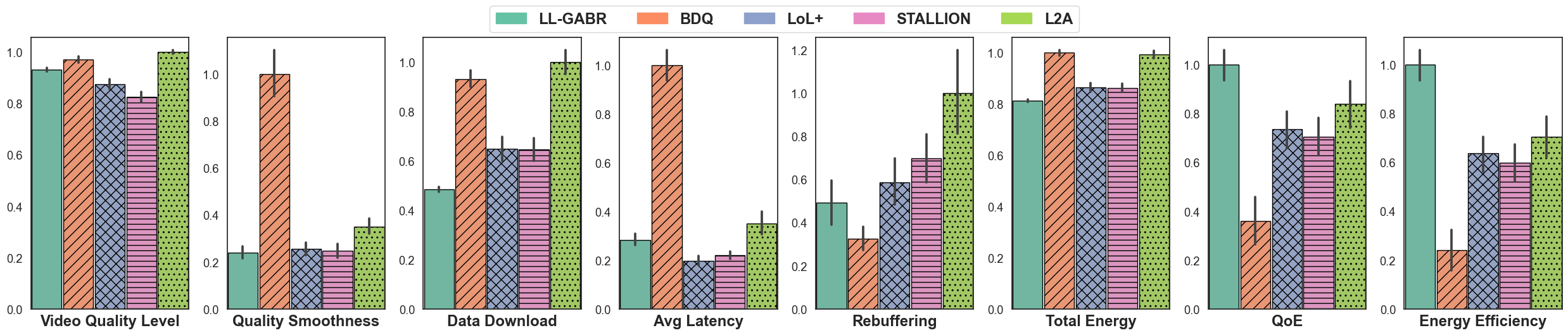
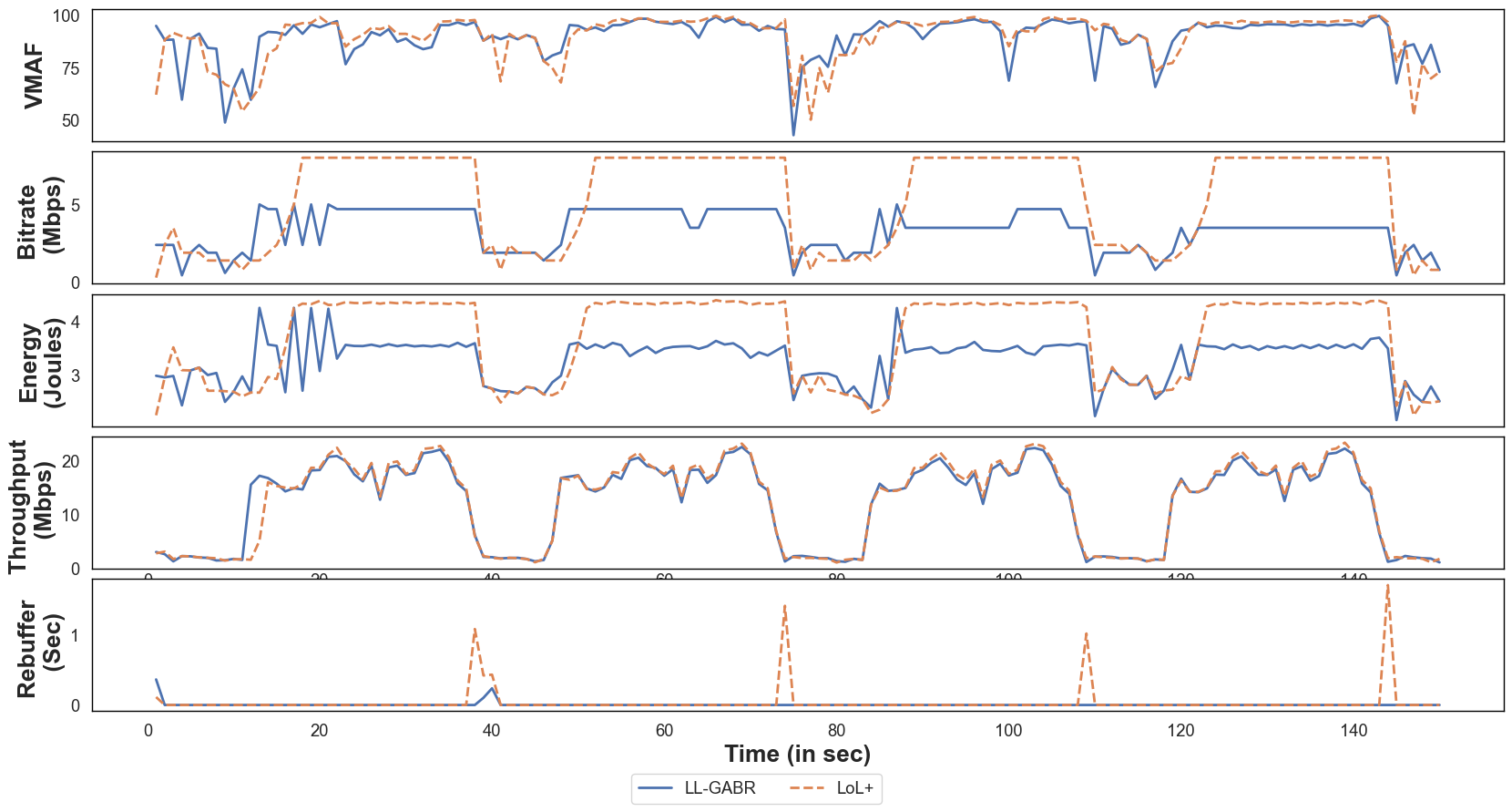
- 实验结果显示,LL-GABR在感知QoE上比最先进的方法提高了44%,并将能耗降低了11%,实现了73%的能效提升。
📝 摘要(中文)
近年来,适应性比特率(ABR)算法在实时视频流传输中取得了显著进展,提升了用户的体验质量(QoE),减少了延迟并降低了缓冲时间。然而,现有的QoE模型未考虑到移动设备用户的需求,导致在高比特率下播放视频并未显著提升感知质量,反而增加了电池消耗。本文提出了LL-GABR,一种基于深度强化学习的方法,通过感知视频质量而非比特率来建模QoE,并结合能耗、延迟、缓冲事件和平滑度等指标。LL-GABR无需对视频、环境或网络设置做假设,能够灵活适应不同编码梯度的视频,无需额外的再训练。实验结果表明,LL-GABR在感知QoE方面比现有方法提高了44%,能效提升达73%。
🔬 方法详解
问题定义:本文旨在解决现有ABR算法在移动设备上未能有效提升感知质量的问题,导致高比特率播放增加了能耗。
核心思路:LL-GABR通过深度强化学习,基于感知视频质量而非单纯比特率来优化用户体验,同时综合考虑能耗、延迟等因素,提升移动设备的能效。
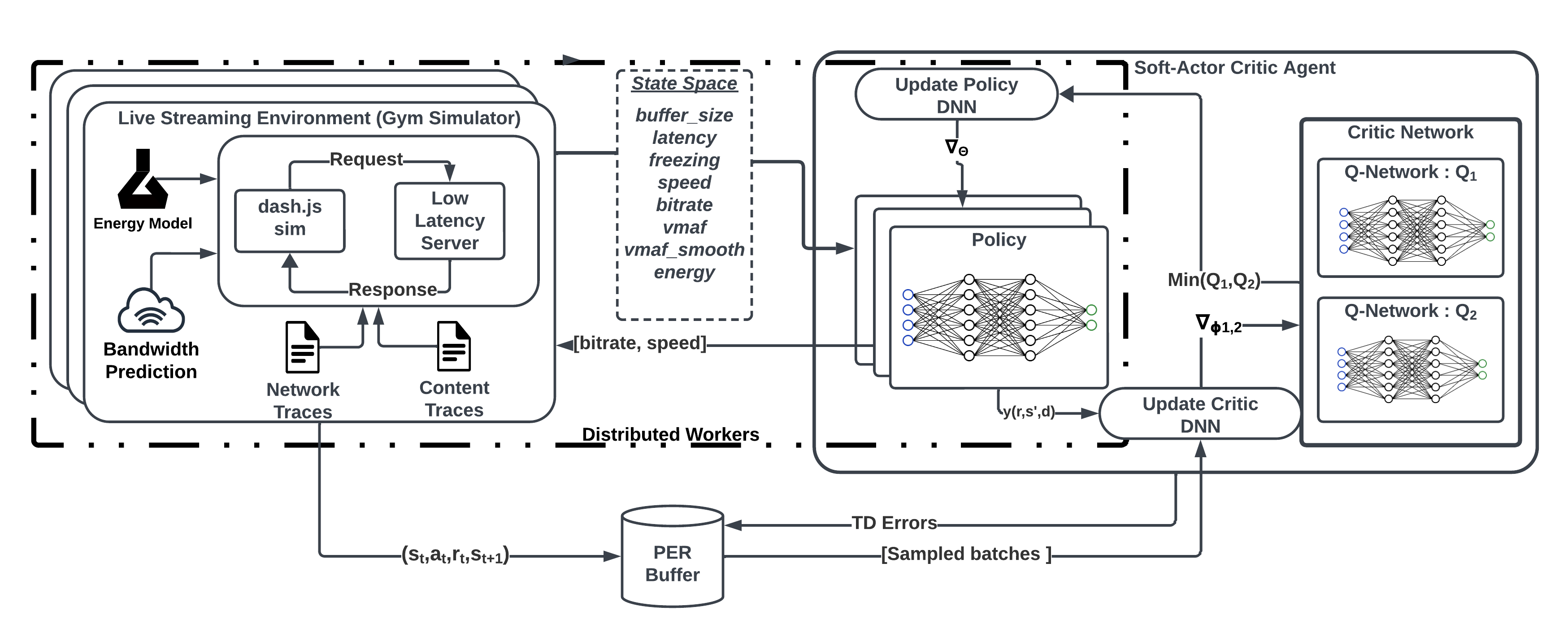
技术框架:LL-GABR的整体架构包括感知质量模型、能耗评估模块和强化学习策略优化模块,能够在不同网络和视频环境下灵活适应。
关键创新:LL-GABR的主要创新在于其不依赖于视频内容和网络设置的假设,能够在不同编码梯度的视频上无缝运行,避免了传统方法的再训练需求。
关键设计:在设计中,LL-GABR采用了特定的损失函数来平衡感知质量与能耗,并使用了深度神经网络结构来实现复杂的QoE建模。具体参数设置和网络结构细节在实验部分进行了详细描述。
🖼️ 关键图片
📊 实验亮点
实验结果表明,LL-GABR在感知QoE方面比现有最先进的方法提高了44%,同时通过减少11%的能耗,实现了73%的能效提升。这一成果展示了LL-GABR在优化移动视频流传输中的显著优势。
🎯 应用场景
LL-GABR的研究成果具有广泛的应用潜力,尤其在移动视频流媒体服务、在线直播平台和移动游戏等领域。通过优化能耗与用户体验,该方法能够显著延长移动设备的使用时间,提升用户满意度,具有重要的商业价值和社会影响。
📄 摘要(原文)
Over the recent years, research and development in adaptive bitrate (ABR) algorithms for live video streaming have been successful in improving users' quality of experience (QoE) by reducing latency to near real-time levels while delivering higher bitrate videos with minimal rebuffering time. However, the QoE models used by these ABR algorithms do not take into account that a large portion of live video streaming clients use mobile devices where a higher bitrate does not necessarily translate into higher perceived quality. Ignoring perceived quality results in playing videos at higher bitrates without a significant increase in perceptual video quality and becomes a burden for battery-constrained mobile devices due to higher energy consumption. In this paper, we propose LL-GABR, a deep reinforcement learning approach that models the QoE using perceived video quality instead of bitrate and uses energy consumption along with other metrics like latency, rebuffering events, and smoothness. LL-GABR makes no assumptions about the underlying video, environment, or network settings and can operate flexibly on different video titles, each having a different bitrate encoding ladder without additional re-training, unlike existing learning-based ABRs. Trace-driven experimental results show that LL-GABR outperforms the state-of-the-art approaches by up to 44% in terms of perceptual QoE and a 73% increase in energy efficiency as a result of reducing net energy consumption by 11%.