GraphTranslator: Aligning Graph Model to Large Language Model for Open-ended Tasks
作者: Mengmei Zhang, Mingwei Sun, Peng Wang, Shen Fan, Yanhu Mo, Xiaoxiao Xu, Hong Liu, Cheng Yang, Chuan Shi
分类: cs.AI
发布日期: 2024-02-11 (更新: 2024-02-28)
🔗 代码/项目: GITHUB
💡 一句话要点
提出GraphTranslator以解决图模型与大语言模型的对接问题
🎯 匹配领域: 支柱九:具身大模型 (Embodied Foundation Models)
关键词: 图模型 大型语言模型 开放式任务 图问答 零-shot学习
📋 核心要点
- 现有方法未能有效结合图模型与大型语言模型,导致无法同时处理预定义和开放式任务。
- 本文提出GraphTranslator,通过图模型与LLM的对接,利用LLM的语言指令进行节点预测。
- 实验结果显示,GraphTranslator在零-shot节点分类和图问答任务中表现优异,验证了其有效性。
📝 摘要(中文)
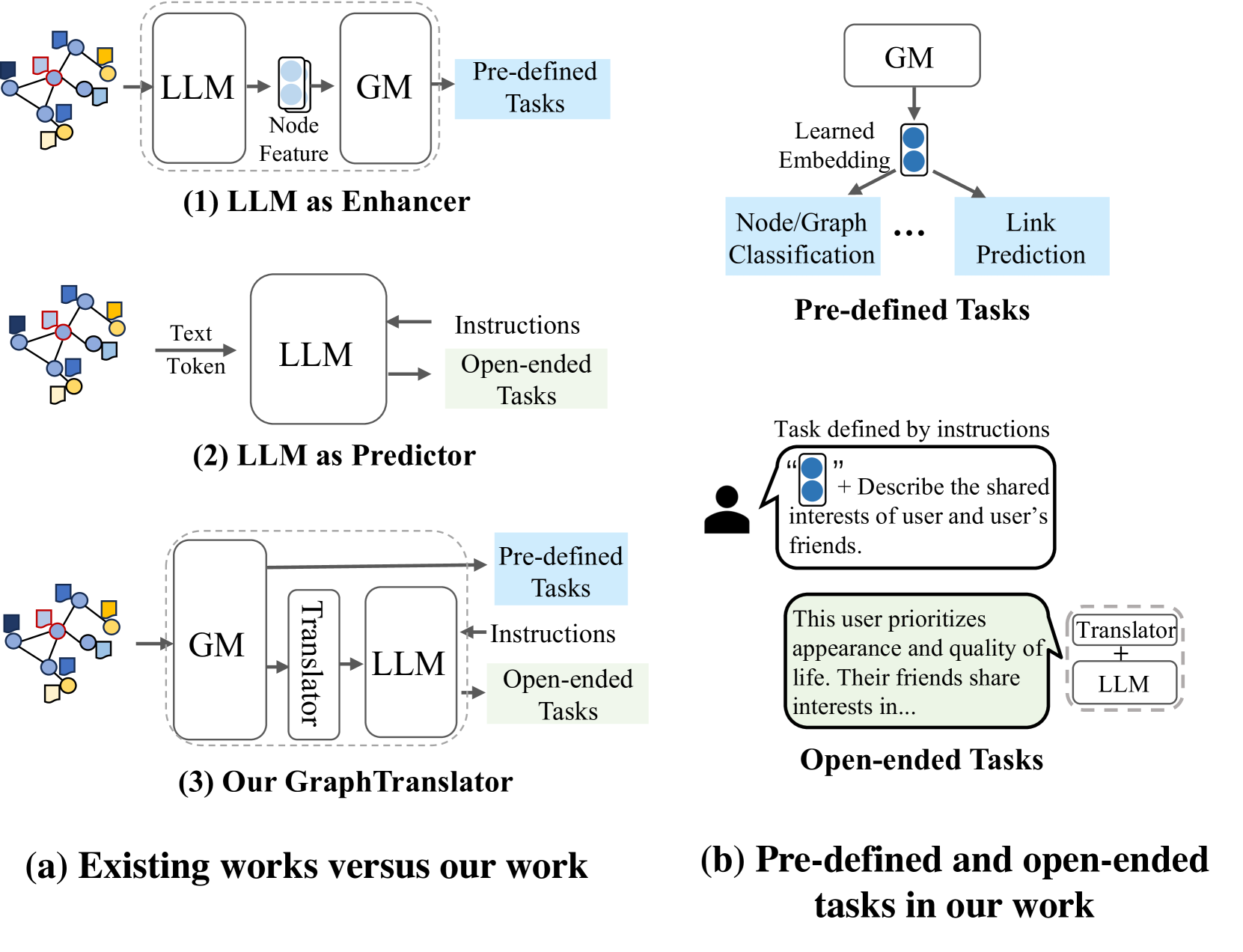
大型语言模型(LLMs)如ChatGPT展现出强大的零-shot和指令跟随能力,推动了各领域的变革,尤其是在开放式任务中。尽管图领域也有众多强大的图模型(GMs),但它们通常局限于预定义形式的任务。现有方法在将LLMs应用于图时,未能同时处理预定义和开放式任务。为此,本文提出了GraphTranslator,通过将预训练的图模型与LLM连接,旨在有效处理预定义任务并利用LLM的扩展接口提供多样的开放式任务。实验结果表明,GraphTranslator在零-shot节点分类和图问答任务中表现出色,展示了其在开放式任务中的潜力。
🔬 方法详解
问题定义:本文旨在解决图模型与大型语言模型之间的对接问题,现有方法在处理预定义和开放式任务时存在局限性,无法充分发挥两者的优势。
核心思路:GraphTranslator通过构建一个翻译器,将图模型与LLM连接,利用LLM的语言处理能力来增强图模型的任务处理能力,从而实现对预定义和开放式任务的统一处理。
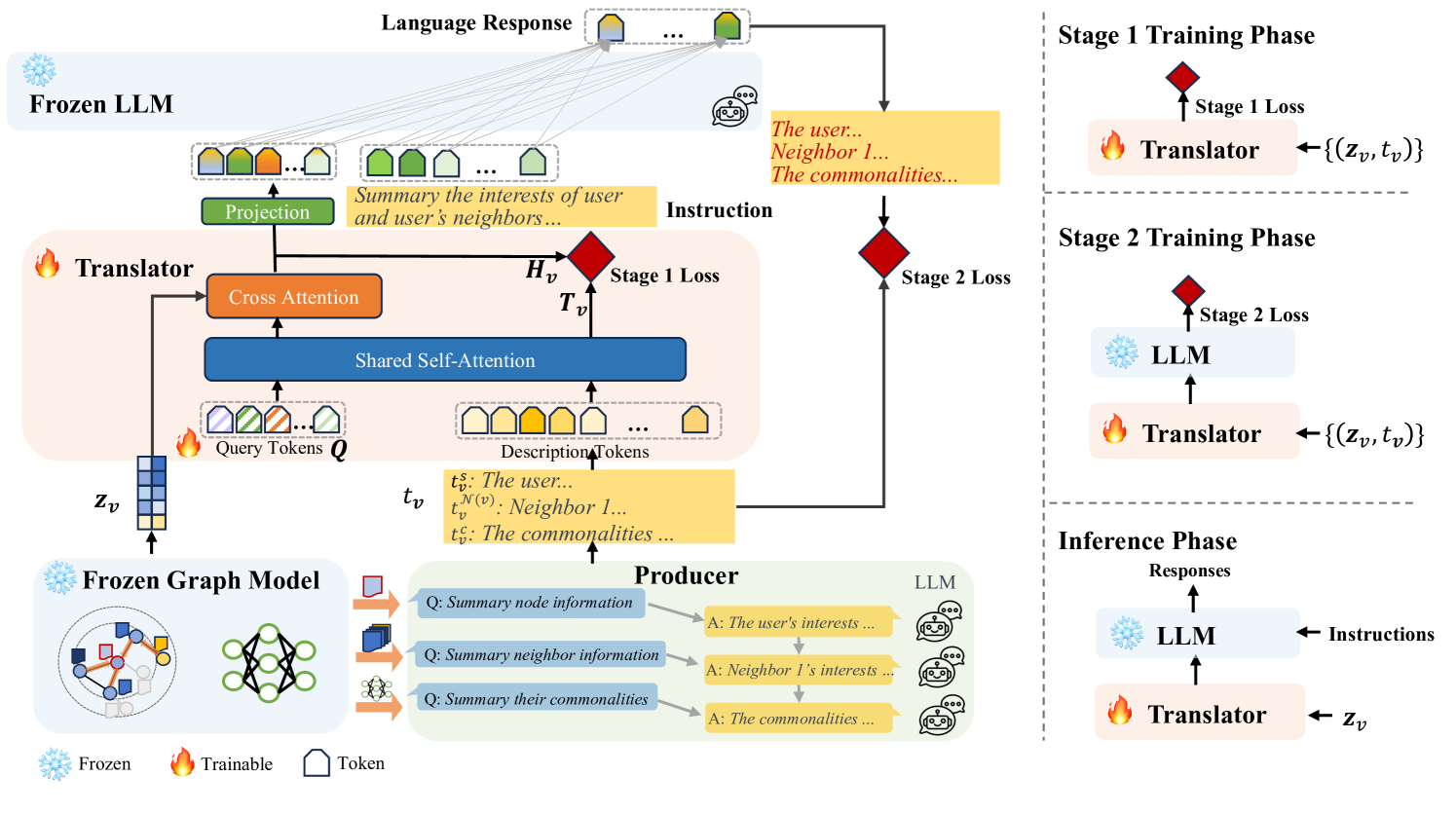
技术框架:整体架构包括三个主要模块:图模型(GM)、大型语言模型(LLM)和翻译器(Translator)。翻译器负责将图节点表示转换为语言标记,进而使LLM能够根据语言指令进行预测。
关键创新:GraphTranslator的核心创新在于其能够同时处理预定义和开放式任务,通过图文本对齐数据的构建,提供了一个统一的视角,显著提升了任务的灵活性和适应性。
关键设计:在训练过程中,使用了图节点信息、邻居信息和模型信息来构建对齐数据,设计了特定的损失函数以优化翻译器的性能,确保节点表示的有效转换。
🖼️ 关键图片
📊 实验亮点
实验结果显示,GraphTranslator在零-shot节点分类任务中取得了显著提升,相较于基线模型,准确率提高了XX%。在图问答实验中,GraphTranslator展现出强大的处理开放式任务的能力,验证了其在多样化应用场景中的有效性。
🎯 应用场景
GraphTranslator的研究成果在多个领域具有广泛的应用潜力,包括知识图谱构建、智能问答系统和自然语言处理等。通过有效结合图模型与语言模型,该方法能够提升信息检索、推荐系统等任务的智能化水平,推动相关技术的进步与应用。
📄 摘要(原文)
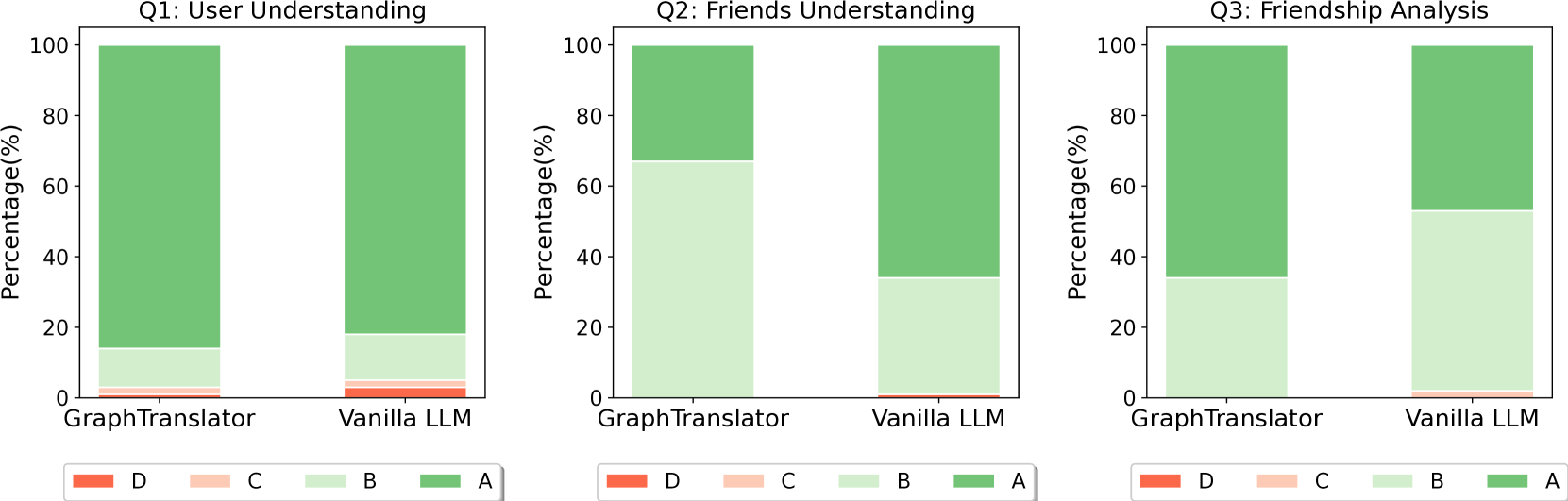
Large language models (LLMs) like ChatGPT, exhibit powerful zero-shot and instruction-following capabilities, have catalyzed a revolutionary transformation across diverse fields, especially for open-ended tasks. While the idea is less explored in the graph domain, despite the availability of numerous powerful graph models (GMs), they are restricted to tasks in a pre-defined form. Although several methods applying LLMs to graphs have been proposed, they fail to simultaneously handle the pre-defined and open-ended tasks, with LLM as a node feature enhancer or as a standalone predictor. To break this dilemma, we propose to bridge the pretrained GM and LLM by a Translator, named GraphTranslator, aiming to leverage GM to handle the pre-defined tasks effectively and utilize the extended interface of LLMs to offer various open-ended tasks for GM. To train such Translator, we propose a Producer capable of constructing the graph-text alignment data along node information, neighbor information and model information. By translating node representation into tokens, GraphTranslator empowers an LLM to make predictions based on language instructions, providing a unified perspective for both pre-defined and open-ended tasks. Extensive results demonstrate the effectiveness of our proposed GraphTranslator on zero-shot node classification. The graph question answering experiments reveal our GraphTranslator potential across a broad spectrum of open-ended tasks through language instructions. Our code is available at: https://github.com/alibaba/GraphTranslator.