Can Graph Descriptive Order Affect Solving Graph Problems with LLMs?
作者: Yuyao Ge, Shenghua Liu, Baolong Bi, Yiwei Wang, Lingrui Mei, Wenjie Feng, Lizhe Chen, Xueqi Cheng
分类: cs.AI
发布日期: 2024-02-11 (更新: 2025-10-14)
备注: Accepted to ACL 2025 main conference
💡 一句话要点
研究图描述顺序对LLM解决图问题的影响
🎯 匹配领域: 支柱九:具身大模型 (Embodied Foundation Models)
关键词: 图推理 大型语言模型 图描述顺序 性能优化 实验评估
📋 核心要点
- 现有研究主要关注LLMs在图推理中的能力,但忽视了图描述的顺序对模型性能的影响。
- 本研究提出通过系统评估图描述的顺序,分析其对LLMs解决图问题的影响,以优化模型表现。
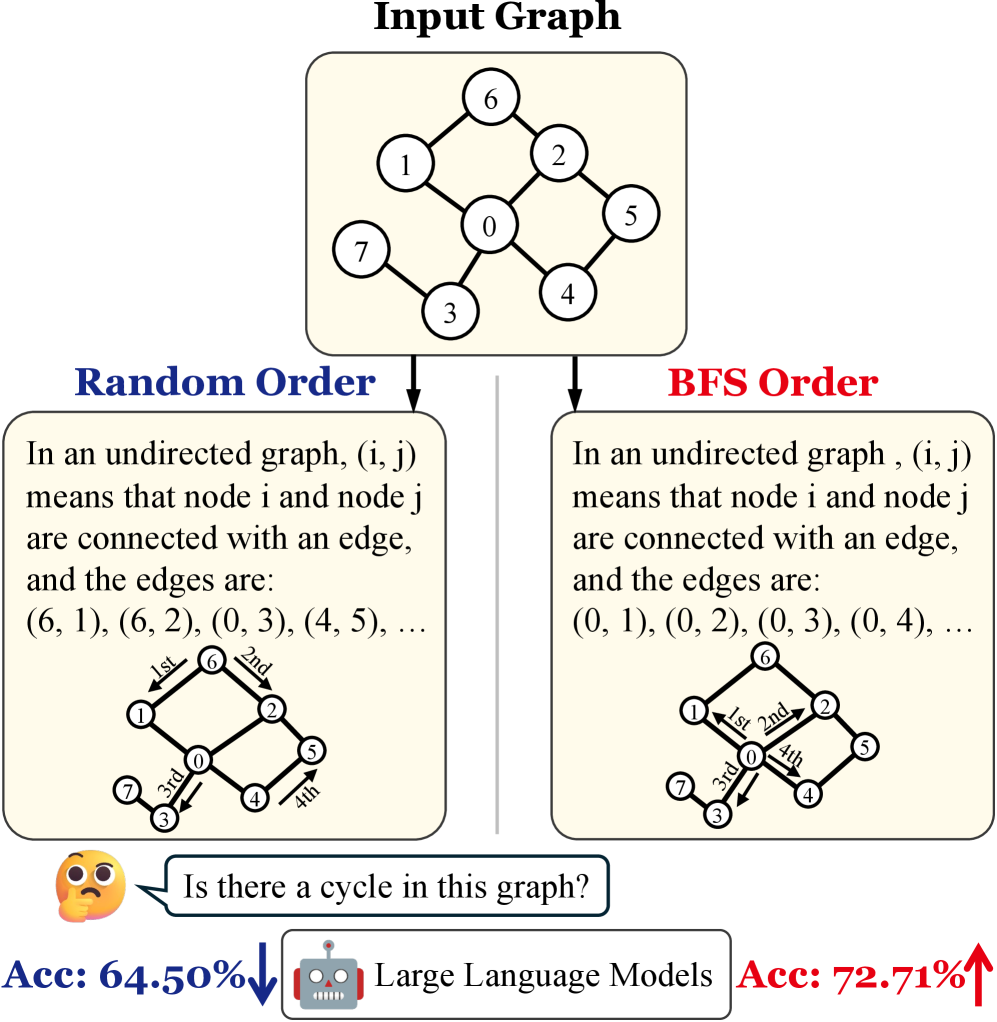
- 实验结果表明,有序的图描述显著提升了LLMs对图结构的理解,且不同任务对描述顺序的敏感性不同。
📝 摘要(中文)
大型语言模型(LLMs)在推理任务中取得了显著成功,尤其是在复杂的图问题上。尽管已有研究探讨了LLMs的图推理能力,但图描述的顺序对模型性能的影响却鲜有关注。本研究首次全面分析了图描述顺序对LLMs性能的影响,评估了四种图描述顺序在六个图问题上的表现。结果显示,图描述的有序性显著提升了LLMs对图结构的理解,且不同任务对图描述顺序的鲁棒性存在差异。这一研究为优化LLMs在图相关问题上的应用提供了重要的理论基础。
🔬 方法详解
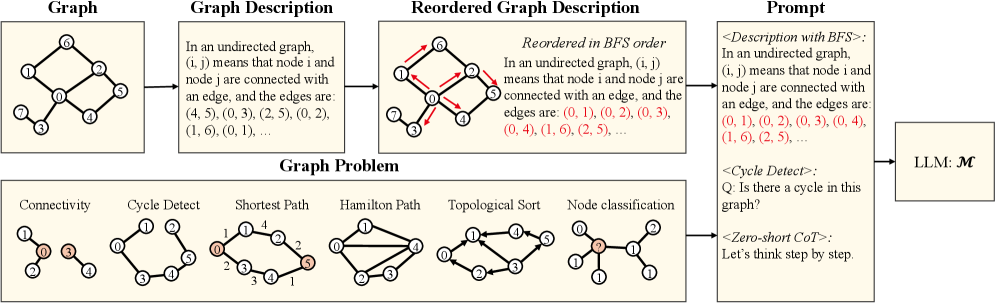
问题定义:本研究旨在解决图描述顺序对大型语言模型(LLMs)在图问题推理中的影响。现有方法未能充分考虑描述顺序这一关键因素,导致模型性能不稳定。
核心思路:论文通过系统评估不同的图描述顺序,探讨其对LLMs性能的影响,旨在通过优化描述顺序来提升模型的推理能力。
技术框架:研究设计了一个实验框架,包含四种不同的图描述顺序,应用于六个不同的图问题,使用六种主流的LLMs进行评估。
关键创新:本研究的主要创新在于首次系统性地分析了图描述顺序对LLMs性能的影响,揭示了这一因素在图推理中的重要性,与以往研究的单一描述方法形成鲜明对比。
关键设计:实验中设置了多种图描述顺序,并对每种顺序的效果进行了详细评估,确保了实验的全面性和结果的可靠性。
🖼️ 关键图片

📊 实验亮点
实验结果显示,使用有序图描述的LLMs在六个图问题上的表现显著提升,尤其是在理解图结构方面。不同任务对描述顺序的鲁棒性差异,进一步强调了图描述顺序的重要性,为未来研究提供了新的方向。
🎯 应用场景
该研究的潜在应用领域包括图数据分析、社交网络分析以及复杂系统建模等。通过优化图描述顺序,LLMs能够更有效地处理图相关问题,提升实际应用中的推理能力,具有重要的实际价值和广泛的未来影响。
📄 摘要(原文)
Large language models (LLMs) have achieved significant success in reasoning tasks, including mathematical reasoning and logical deduction. Among these reasoning tasks, graph problems stand out due to their complexity and unique structural characteristics, attracting considerable attention from researchers. Previous studies have explored LLMs' graph reasoning abilities through various techniques, such as different encoding methods for graph structures and the use of carefully designed prompts. However, a critical factor has been mostly overlooked: the prompt sequential order in which graph descriptions are presented to the models. In this study, we present the first comprehensive analysis of how the order of graph descriptions impacts LLM performance. Specifically, we comprehensively evaluate four graph description orders across six graph problems using six mainstream LLMs. The results reveal that: (1) ordered graph descriptions significantly improve LLMs' comprehension of graph structures; (2) the robustness of LLMs to graph description order varies across different tasks; and (3) the impact of graph order on performance is closely related to the inherent characteristics of tasks. This study provides a critical advancement in the application of LLMs for solving graph-related problems, paving the way for future research to optimize model performance through strategic graph description ordering.