Can Generative Agents Predict Emotion?
作者: Ciaran Regan, Nanami Iwahashi, Shogo Tanaka, Mizuki Oka
分类: cs.AI, cs.CL
发布日期: 2024-02-06 (更新: 2024-02-07)
备注: 14 pages, 6 figures
💡 一句话要点
提出一种新架构以提升生成代理的情感预测能力
🎯 匹配领域: 支柱九:具身大模型 (Embodied Foundation Models)
关键词: 情感预测 生成代理 大型语言模型 上下文理解 情感计算
📋 核心要点
- 现有大型语言模型在情感理解方面与人类存在差距,缺乏有效的情感状态预测机制。
- 论文提出了一种新架构,通过比较新体验与过去记忆,增强生成代理的情感理解能力。
- 实验结果显示,引入上下文有时能改善情感对齐,但仍需更多研究以验证效果。
📝 摘要(中文)
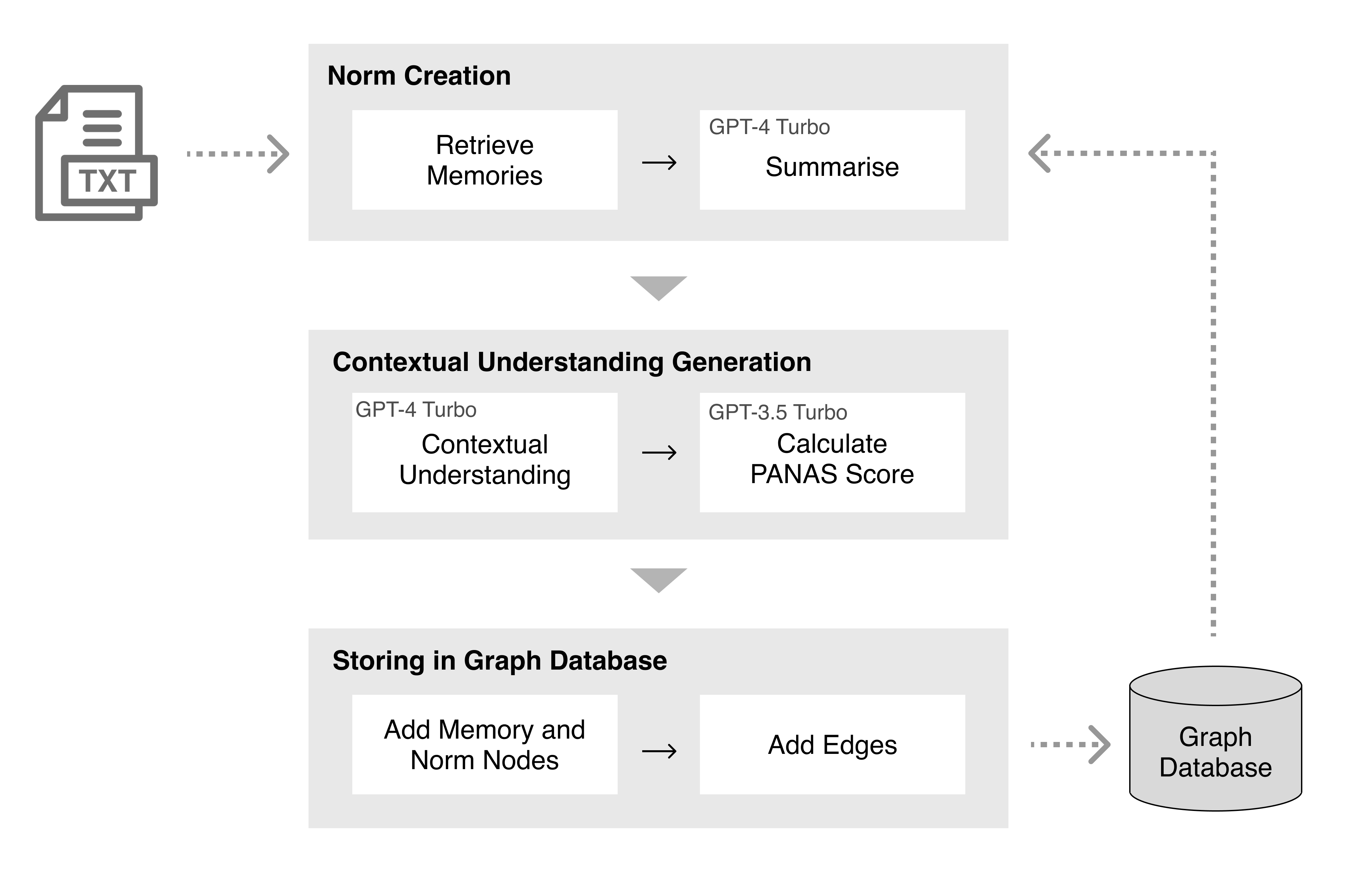
大型语言模型(LLMs)展现了多种类人类的能力,但其同理心理解和情感状态尚未与人类对齐。本研究探讨了生成LLM代理在感知新事件时情感状态的演变,提出了一种新颖的架构,通过将新体验与过去记忆进行比较,使代理能够在上下文中理解新体验。代理将新体验视为时间序列文本数据,并生成相关过去记忆的摘要,称为“标准”。通过这种比较,我们可以分析代理如何在上下文中对新体验作出反应。最终,新体验被添加到代理的记忆中,以便在未来的标准创建中使用。实验结果表明,引入上下文有时可以改善代理的情感对齐,但仍需进一步研究与人类评估者的比较。
🔬 方法详解
问题定义:本论文旨在解决生成代理在情感理解和预测方面的不足,现有方法未能有效捕捉情感状态与上下文之间的关系。
核心思路:通过将新体验与过去的情感记忆进行比较,代理能够在情感生成中引入上下文信息,从而提升情感理解的准确性。
技术框架:整体架构包括三个主要模块:新体验感知模块、记忆摘要生成模块和情感反应分析模块。代理首先感知新输入,将其视为时间序列文本数据,然后生成相关的过去记忆摘要,最后进行情感反应分析。
关键创新:本研究的创新在于引入了“标准”概念,通过比较新体验与过去记忆,使得情感生成更具上下文相关性,这与传统方法的静态处理方式形成了鲜明对比。
关键设计:在技术细节上,代理使用了特定的损失函数来优化情感预测的准确性,并设计了适应性记忆更新机制,以便在未来的情感生成中利用新体验。
🖼️ 关键图片

📊 实验亮点
实验结果表明,尽管引入上下文有时能提升情感对齐,但整体效果仍不稳定。具体而言,在某些情境下,代理的情感反应与人类评估者的评分存在显著差异,提示需要进一步优化模型设计。
🎯 应用场景
该研究的潜在应用领域包括情感计算、智能客服、虚拟助手等,能够提升人机交互的情感理解能力,增强用户体验。未来,随着技术的进一步发展,生成代理在情感预测方面的能力将可能在心理健康、教育等领域产生深远影响。
📄 摘要(原文)
Large Language Models (LLMs) have demonstrated a number of human-like abilities, however the empathic understanding and emotional state of LLMs is yet to be aligned to that of humans. In this work, we investigate how the emotional state of generative LLM agents evolves as they perceive new events, introducing a novel architecture in which new experiences are compared to past memories. Through this comparison, the agent gains the ability to understand new experiences in context, which according to the appraisal theory of emotion is vital in emotion creation. First, the agent perceives new experiences as time series text data. After perceiving each new input, the agent generates a summary of past relevant memories, referred to as the norm, and compares the new experience to this norm. Through this comparison we can analyse how the agent reacts to the new experience in context. The PANAS, a test of affect, is administered to the agent, capturing the emotional state of the agent after the perception of the new event. Finally, the new experience is then added to the agents memory to be used in the creation of future norms. By creating multiple experiences in natural language from emotionally charged situations, we test the proposed architecture on a wide range of scenarios. The mixed results suggests that introducing context can occasionally improve the emotional alignment of the agent, but further study and comparison with human evaluators is necessary. We hope that this paper is another step towards the alignment of generative agents.