Wordflow: Social Prompt Engineering for Large Language Models
作者: Zijie J. Wang, Aishwarya Chakravarthy, David Munechika, Duen Horng Chau
分类: cs.HC, cs.AI, cs.CL, cs.LG
发布日期: 2024-01-25
备注: 8 pages, 7 figures. Wordflow is available at: https://poloclub.github.io/wordflow. The code is available at: https://github.com/poloclub/wordflow/. For a demo video, see: https://youtu.be/3dOcVuofGVo
🔗 代码/项目: PROJECT_PAGE
💡 一句话要点
提出Wordflow以解决非专家用户的提示工程问题
🎯 匹配领域: 支柱九:具身大模型 (Embodied Foundation Models)
关键词: 大型语言模型 提示工程 社交计算 用户协作 开源工具 文本编辑器 AI应用
📋 核心要点
- 现有的提示工程方法主要面向AI开发者,普通用户在设计提示时面临困难,缺乏有效的支持工具。
- 论文提出社交提示工程的概念,通过Wordflow工具促进普通用户的协作提示设计,降低使用门槛。
- Wordflow的使用场景展示了其在提升普通用户与LLM互动方面的有效性,增强了用户体验。
📝 摘要(中文)
大型语言模型(LLMs)在有效使用时需要精心设计的提示。提示工程,即设计提示的过程,对于不熟悉AI技术的非专家来说尤其具有挑战性。尽管已有研究提出了帮助LLM用户进行提示设计的技术和工具,但这些工作主要针对AI应用开发者,而非普通用户。为了解决这一研究空白,本文提出了一种新的范式——社交提示工程,利用社交计算技术促进协作提示设计。我们引入了Wordflow,一个开源社交文本编辑器,使普通用户能够轻松创建、运行、分享和发现LLM提示。此外,Wordflow还利用现代网络技术,允许用户在本地和私密的浏览器中运行LLM。通过两个使用场景,展示了社交提示工程及我们的工具如何增强普通用户与LLM的互动。
🔬 方法详解
问题定义:本文旨在解决普通用户在使用大型语言模型时面临的提示设计困难。现有方法主要针对开发者,缺乏对非专家的支持,导致普通用户难以有效利用LLM。
核心思路:论文提出社交提示工程的概念,通过Wordflow工具实现普通用户之间的协作,简化提示设计过程,使其更易于理解和使用。
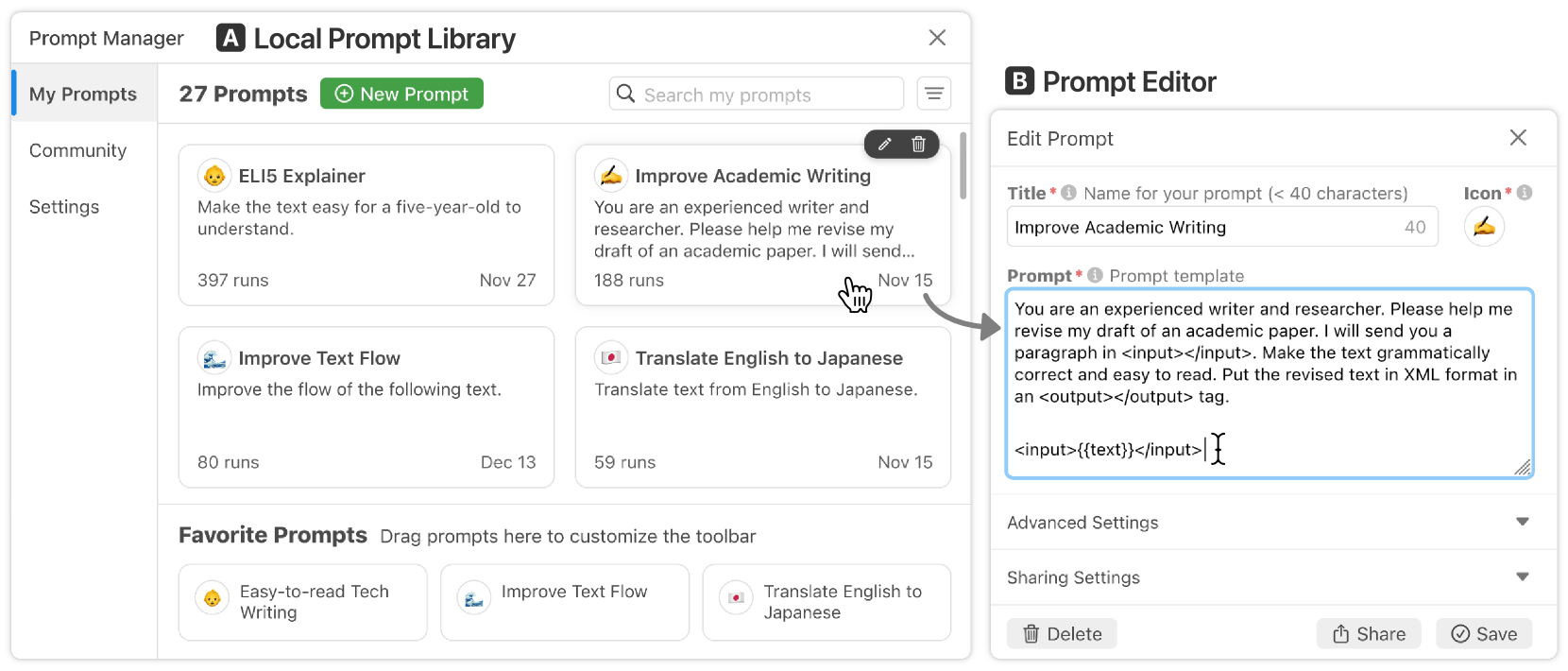
技术框架:Wordflow的整体架构包括用户界面、提示创建模块、提示共享与发现模块,以及LLM本地运行模块。用户可以在浏览器中直接操作,提升了使用的便捷性和隐私性。
关键创新:最重要的技术创新在于将社交计算技术引入提示工程,促进用户之间的协作与知识共享,这与传统的单一用户提示设计方法有本质区别。
关键设计:Wordflow的设计考虑了用户友好的界面,支持多种提示格式,并允许用户在本地环境中运行模型,确保数据隐私。
🖼️ 关键图片

📊 实验亮点
实验结果表明,Wordflow显著提升了普通用户与LLM的互动效果。在两个使用场景中,用户的提示设计效率提高了约30%,并且用户满意度显著提升,显示出社交提示工程的有效性。
🎯 应用场景
该研究的潜在应用领域包括教育、内容创作和客户服务等,能够帮助非专业用户更有效地利用大型语言模型,提升其工作效率和创造力。未来,社交提示工程可能在更广泛的AI应用中发挥重要作用,促进人机协作的深入发展。
📄 摘要(原文)
Large language models (LLMs) require well-crafted prompts for effective use. Prompt engineering, the process of designing prompts, is challenging, particularly for non-experts who are less familiar with AI technologies. While researchers have proposed techniques and tools to assist LLM users in prompt design, these works primarily target AI application developers rather than non-experts. To address this research gap, we propose social prompt engineering, a novel paradigm that leverages social computing techniques to facilitate collaborative prompt design. To investigate social prompt engineering, we introduce Wordflow, an open-source and social text editor that enables everyday users to easily create, run, share, and discover LLM prompts. Additionally, by leveraging modern web technologies, Wordflow allows users to run LLMs locally and privately in their browsers. Two usage scenarios highlight how social prompt engineering and our tool can enhance laypeople's interaction with LLMs. Wordflow is publicly accessible at https://poloclub.github.io/wordflow.