Thousands of AI Authors on the Future of AI
作者: Katja Grace, Harlan Stewart, Julia Fabienne Sandkühler, Stephen Thomas, Ben Weinstein-Raun, Jan Brauner, Richard C. Korzekwa
分类: cs.CY, cs.AI, cs.LG
发布日期: 2024-01-05 (更新: 2025-10-08)
备注: The asterisk indicates the corresponding author. The dagger indicates equal contribution
期刊: Journal of Artificial Intelligence Research 84:9 (2025)
DOI: 10.1613/jair.1.19087
💡 一句话要点
对2778名AI研究者的调查揭示未来AI发展的预测与挑战
🎯 匹配领域: 支柱九:具身大模型 (Embodied Foundation Models)
关键词: AI发展预测 研究者调查 潜在风险 自动化 伦理规范
📋 核心要点
- 现有方法对AI进展的预测存在较大不确定性,尤其是在长期影响方面。
- 论文通过对2778名AI研究者的调查,系统性地收集了对AI未来发展的看法与预测。
- 调查结果显示,尽管对AI的乐观态度占主导,但对潜在风险的担忧也不容忽视。
📝 摘要(中文)
在本次最大规模的AI研究者调查中,2778名在顶级人工智能领域发表过论文的研究者对AI进展的速度、先进AI系统的性质及其影响进行了预测。结果显示,到2028年,AI系统实现多个里程碑的概率至少为50%。尽管68.3%的受访者认为超人类AI带来良好结果的可能性高于坏结果,但仍有相当一部分人对AI进展的长期价值表示不确定。调查还指出,AI进步的速度对人类未来的影响存在分歧,但普遍认为应优先研究降低AI系统潜在风险的方案。
🔬 方法详解
问题定义:本研究旨在评估AI研究者对未来AI发展的看法及其潜在影响,现有方法缺乏系统性和广泛性,难以全面反映研究者的观点。
核心思路:通过大规模调查收集AI领域研究者的预测和看法,分析其对AI进展速度、潜在风险及未来影响的看法,以提供更全面的视角。
技术框架:研究采用问卷调查的形式,涵盖多个维度,包括对AI进展的乐观与悲观预测、对人类职业自动化的看法,以及对AI潜在风险的担忧。
关键创新:本研究是迄今为止规模最大的AI研究者调查,首次系统性地量化了对AI未来发展的多元看法,填补了现有文献的空白。
关键设计:调查设计包括多个问题,涉及对AI系统实现特定里程碑的概率评估、对人类职业自动化的预测,以及对AI潜在风险的看法,确保数据的全面性与代表性。
🖼️ 关键图片
📊 实验亮点
调查结果显示,2778名研究者认为到2028年AI系统实现多个关键里程碑的概率至少为50%。此外,受访者对超人类AI的乐观态度与对潜在风险的担忧并存,68.3%认为良好结果更可能,但仍有38%至51%的人认为AI可能导致人类灭绝的风险至少为10%。
🎯 应用场景
该研究的结果对政策制定者、研究机构和企业在AI技术的开发与应用中具有重要指导意义。通过了解研究者对AI未来发展的看法,可以更好地制定相应的伦理规范和安全措施,以应对潜在风险,促进AI技术的可持续发展。
📄 摘要(原文)
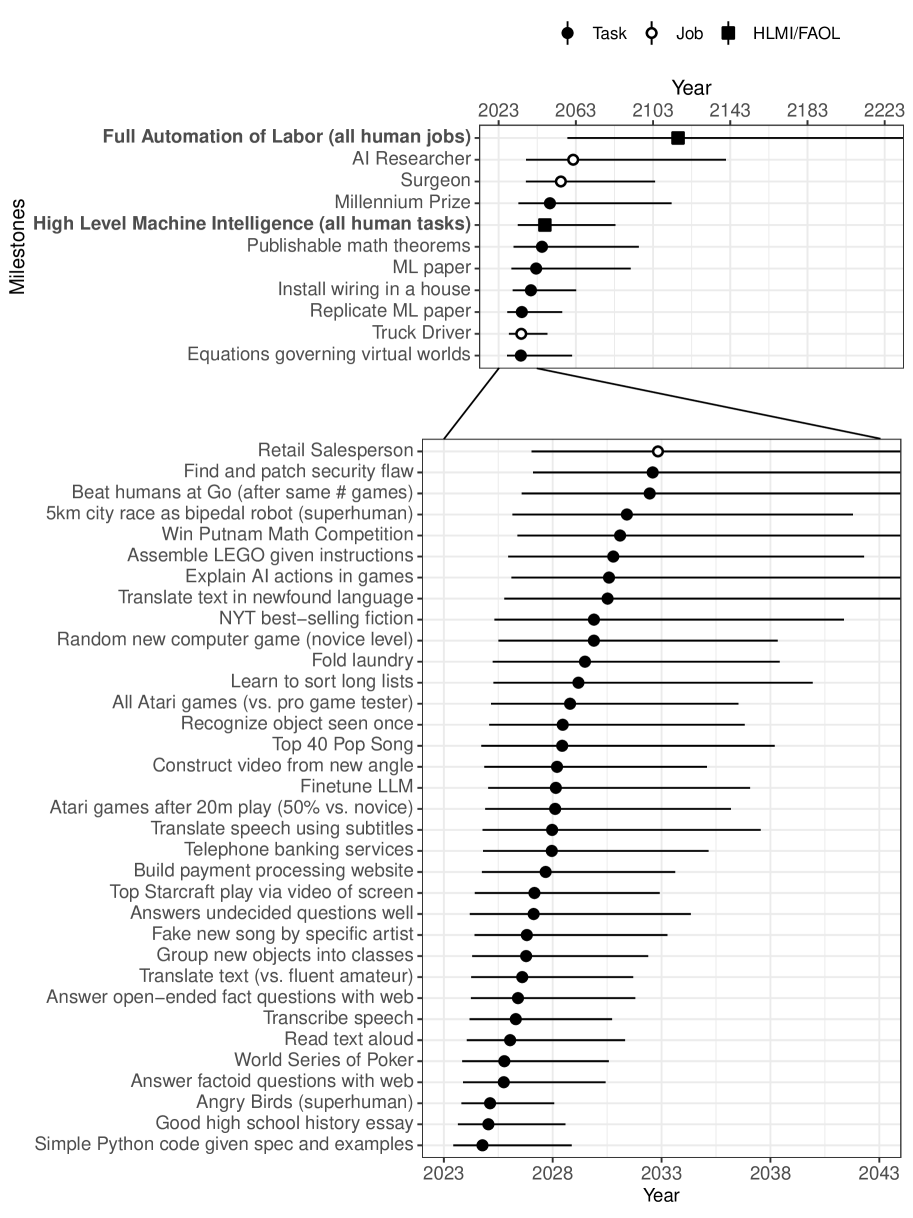
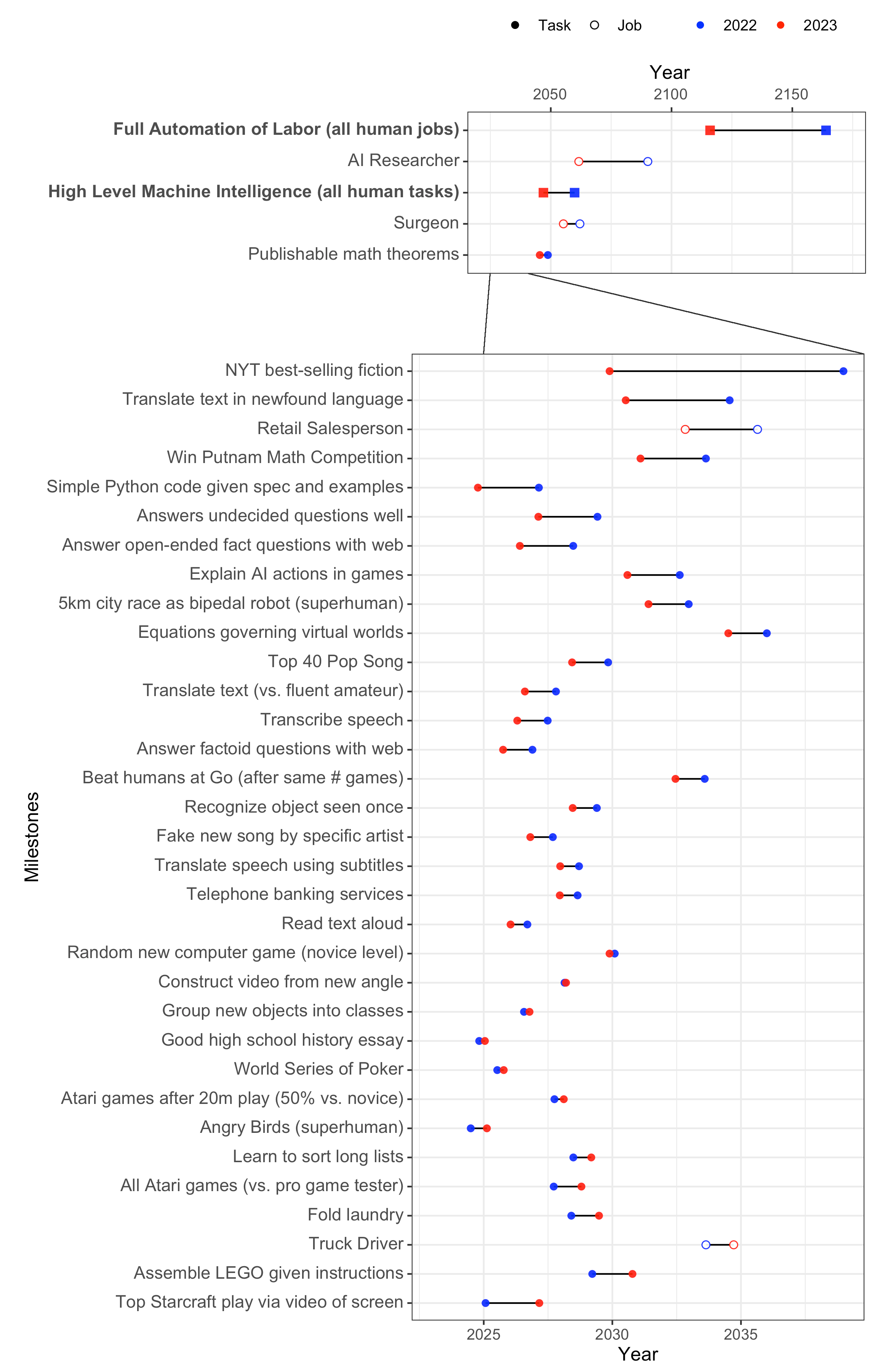
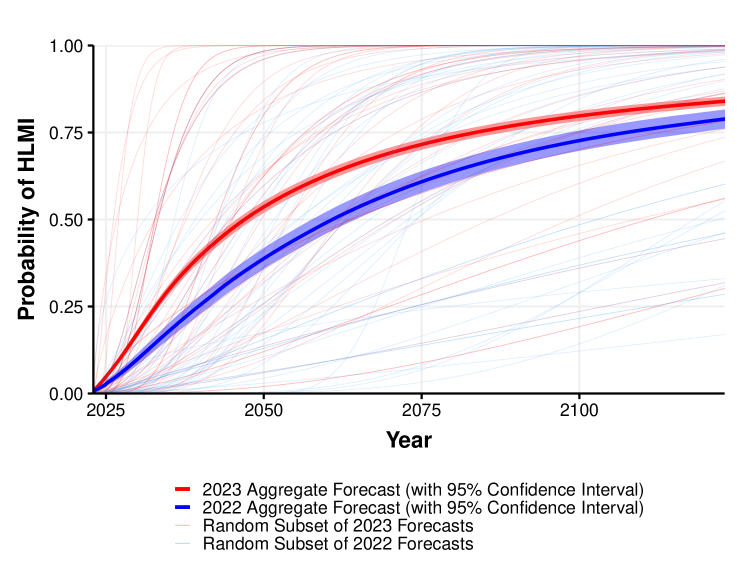
In the largest survey of its kind, 2,778 researchers who had published in top-tier artificial intelligence (AI) venues gave predictions on the pace of AI progress and the nature and impacts of advanced AI systems The aggregate forecasts give at least a 50% chance of AI systems achieving several milestones by 2028, including autonomously constructing a payment processing site from scratch, creating a song indistinguishable from a new song by a popular musician, and autonomously downloading and fine-tuning a large language model. If science continues undisrupted, the chance of unaided machines outperforming humans in every possible task was estimated at 10% by 2027, and 50% by 2047. The latter estimate is 13 years earlier than that reached in a similar survey we conducted only one year earlier [Grace et al., 2022]. However, the chance of all human occupations becoming fully automatable was forecast to reach 10% by 2037, and 50% as late as 2116 (compared to 2164 in the 2022 survey). Most respondents expressed substantial uncertainty about the long-term value of AI progress: While 68.3% thought good outcomes from superhuman AI are more likely than bad, of these net optimists 48% gave at least a 5% chance of extremely bad outcomes such as human extinction, and 59% of net pessimists gave 5% or more to extremely good outcomes. Between 38% and 51% of respondents gave at least a 10% chance to advanced AI leading to outcomes as bad as human extinction. More than half suggested that "substantial" or "extreme" concern is warranted about six different AI-related scenarios, including misinformation, authoritarian control, and inequality. There was disagreement about whether faster or slower AI progress would be better for the future of humanity. However, there was broad agreement that research aimed at minimizing potential risks from AI systems ought to be prioritized more.