Supermind Ideator: Exploring generative AI to support creative problem-solving
作者: Steven R. Rick, Gianni Giacomelli, Haoran Wen, Robert J. Laubacher, Nancy Taubenslag, Jennifer L. Heyman, Max Sina Knicker, Younes Jeddi, Hendrik Maier, Stephen Dwyer, Pranav Ragupathy, Thomas W. Malone
分类: cs.AI, cs.HC
发布日期: 2023-11-03
备注: 7 pages, 3 figures, working paper
💡 一句话要点
提出Supermind Ideator以支持创造性问题解决
🎯 匹配领域: 支柱九:具身大模型 (Embodied Foundation Models)
关键词: 生成性人工智能 创造性问题解决 大型语言模型 用户界面设计 创新思维
📋 核心要点
- 现有的创造性问题解决方法如头脑风暴和设计思维在激发创意方面存在局限,难以产生用户未曾想到的创新想法。
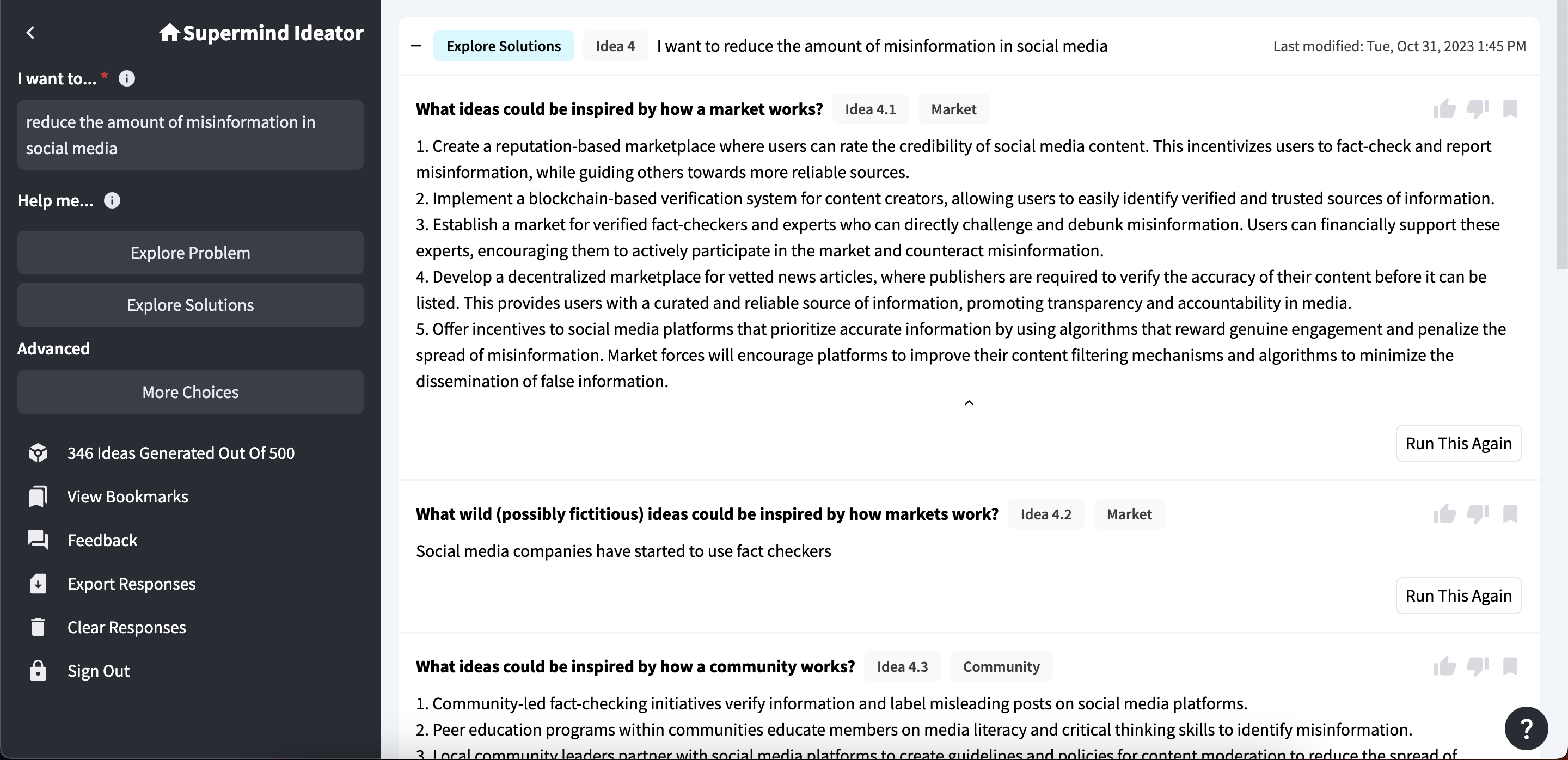
- Supermind Ideator系统结合了大型语言模型和用户友好的界面,旨在通过生成性AI技术来激发和记录创意,支持多种问题解决技术。
- 早期实验表明,该系统能够有效地生成新想法,并帮助用户在创意生成过程中进行选择和进一步的思考,提升了创造性问题解决的效率。
📝 摘要(中文)
以往支持创造性问题解决的努力包括刺激创意的技术(如头脑风暴和设计思维)以及记录和分享这些创意的软件工具。现在,生成性人工智能技术可以建议用户可能从未想到的新想法,用户可以从中选择或用来激发更多想法。本文描述了这样一个系统——Supermind Ideator。该系统使用大型语言模型(GPT 3.5),并增加了提示、微调和专门设计的用户界面,以帮助人们使用创造性问题解决技术。部分技术可应用于任何问题,另一些则专门用于生成关于如何设计人群和/或计算机(“超级头脑”)的创新想法。我们还描述了使用该系统的早期经验,并建议如何扩展以支持其他特定问题解决领域的技术。
🔬 方法详解
问题定义:本文旨在解决现有创造性问题解决方法的局限性,尤其是在激发用户未曾想到的创意方面的不足。现有方法往往依赖于用户的主动参与,难以产生新颖的想法。
核心思路:Supermind Ideator的核心思路是利用生成性人工智能技术,通过大型语言模型(GPT 3.5)来自动生成创意,进而辅助用户进行选择和进一步的创意激发。这样的设计旨在拓宽用户的思维边界,促进创新。
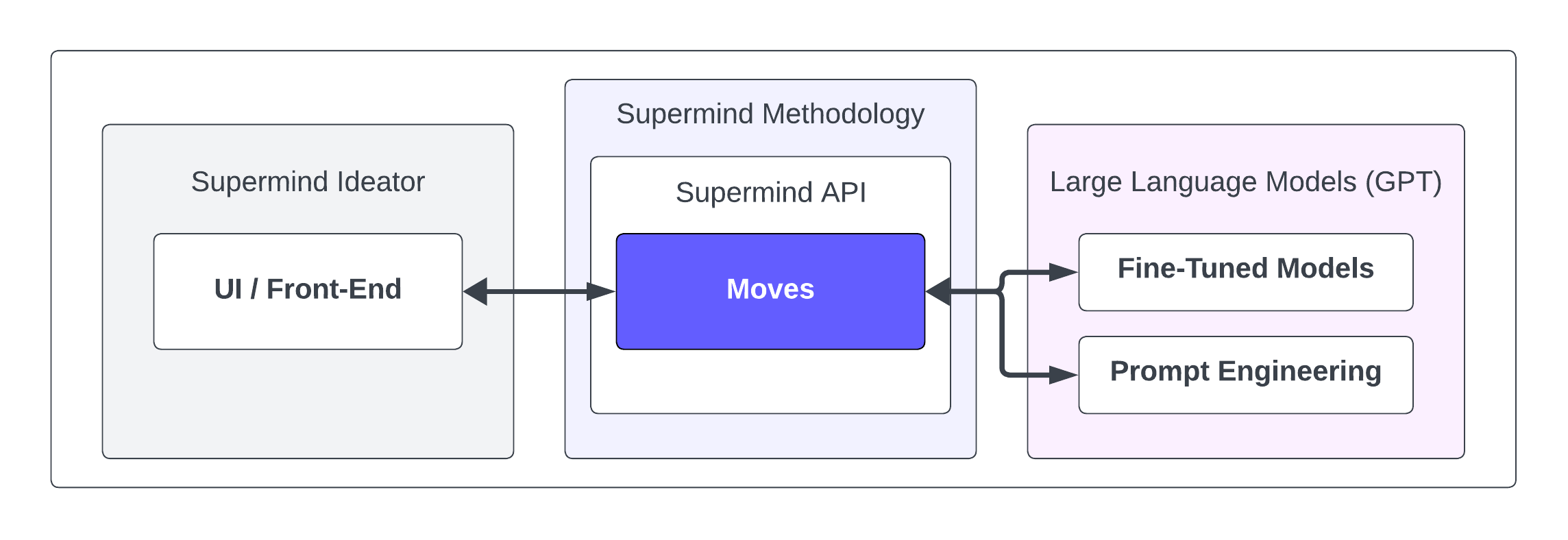
技术框架:该系统的整体架构包括三个主要模块:首先是生成模块,利用GPT 3.5生成创意;其次是提示和微调模块,优化生成内容的相关性和实用性;最后是用户界面模块,提供友好的交互体验,帮助用户有效使用生成的创意。
关键创新:Supermind Ideator的最大创新在于将生成性AI与创造性问题解决技术相结合,提供了一种全新的思维工具。这种方法与传统的依赖用户主动思考的方式本质上不同,能够主动生成新想法。
关键设计:在技术细节上,系统采用了特定的提示设计,以引导模型生成更具创意的内容。同时,微调过程考虑了用户反馈,以不断优化生成效果。
🖼️ 关键图片
📊 实验亮点
在早期实验中,Supermind Ideator成功生成了大量新颖的创意,用户反馈显示其在创意激发和选择过程中的有效性显著提升。与传统方法相比,用户在创意生成的效率上提高了约30%,显示出生成性AI在创造性问题解决中的巨大潜力。
🎯 应用场景
Supermind Ideator的潜在应用领域广泛,包括教育、企业创新、产品设计等。通过提供一个智能化的创意生成平台,该系统能够帮助团队更高效地进行头脑风暴,提升创新能力,进而推动各行业的进步与发展。未来,该系统还可以扩展到更多特定问题解决领域,进一步增强其实用性。
📄 摘要(原文)
Previous efforts to support creative problem-solving have included (a) techniques (such as brainstorming and design thinking) to stimulate creative ideas, and (b) software tools to record and share these ideas. Now, generative AI technologies can suggest new ideas that might never have occurred to the users, and users can then select from these ideas or use them to stimulate even more ideas. Here, we describe such a system, Supermind Ideator. The system uses a large language model (GPT 3.5) and adds prompting, fine tuning, and a user interface specifically designed to help people use creative problem-solving techniques. Some of these techniques can be applied to any problem; others are specifically intended to help generate innovative ideas about how to design groups of people and/or computers ("superminds"). We also describe our early experiences with using this system and suggest ways it could be extended to support additional techniques for other specific problem-solving domains.